VENARI
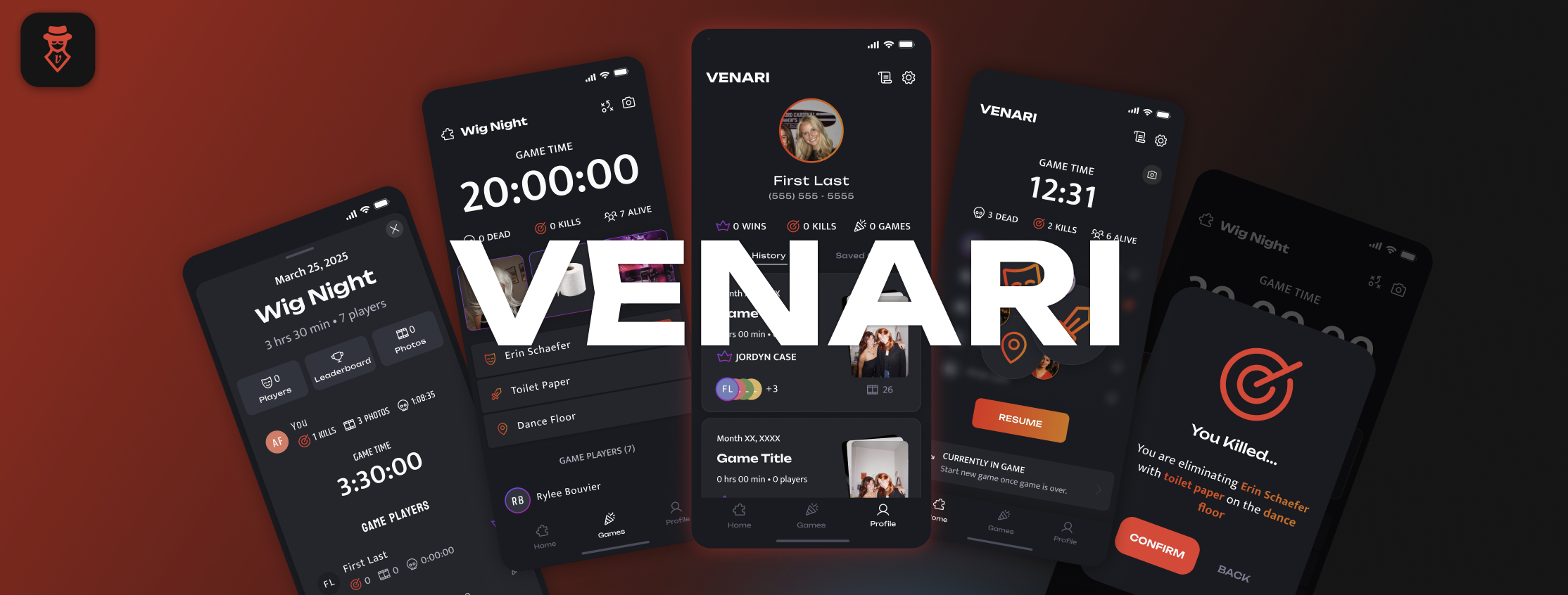
Venari is a real-world social game where players are assigned a target, an item, and a location submitted by other players. To eliminate their target, players must creatively lure them into interacting with the assigned item at the specified location. The game continues until only one player remains, blending strategy, surprise, and social interaction in a dynamic real-world game experience with friends.
My Role
Founder
Project
Passion Project
Timeline
Fall 2025
Tools Used
Figma, Upwork
Overview
Background
Venari started as a game my friends and I would play on family trips or nights out - it was basically real-life CLUE. To set it up, each person got three slips of paper: one to write a location, one for an item, and one with their own name. We’d toss them into three separate bowls and each draw one of each. The goal was to get your assigned person to interact with the chosen object in the specific location without them catching on. It was always a fun, but kind of a hassle to organize. You had to keep track of everything on paper, setup took forever, and sometimes people would draw each other’s names and we’d experience a dead-end problem.
I wanted to make a version that actually worked - something easy to play with friends but smart enough to handle all the behind-the-scenes gameplay. That turned into Venari, which means “to hunt” in Latin - an app that handles assignments, avoids broken pairings, and tracks progress so players can focus on being sneaky, social, and creative when playing. Making it digital also opened up new ideas like photos from the action, game capsules, and quick-start templates that make it way easier (and more fun) to jump into a game anytime.
Step 1: Design System
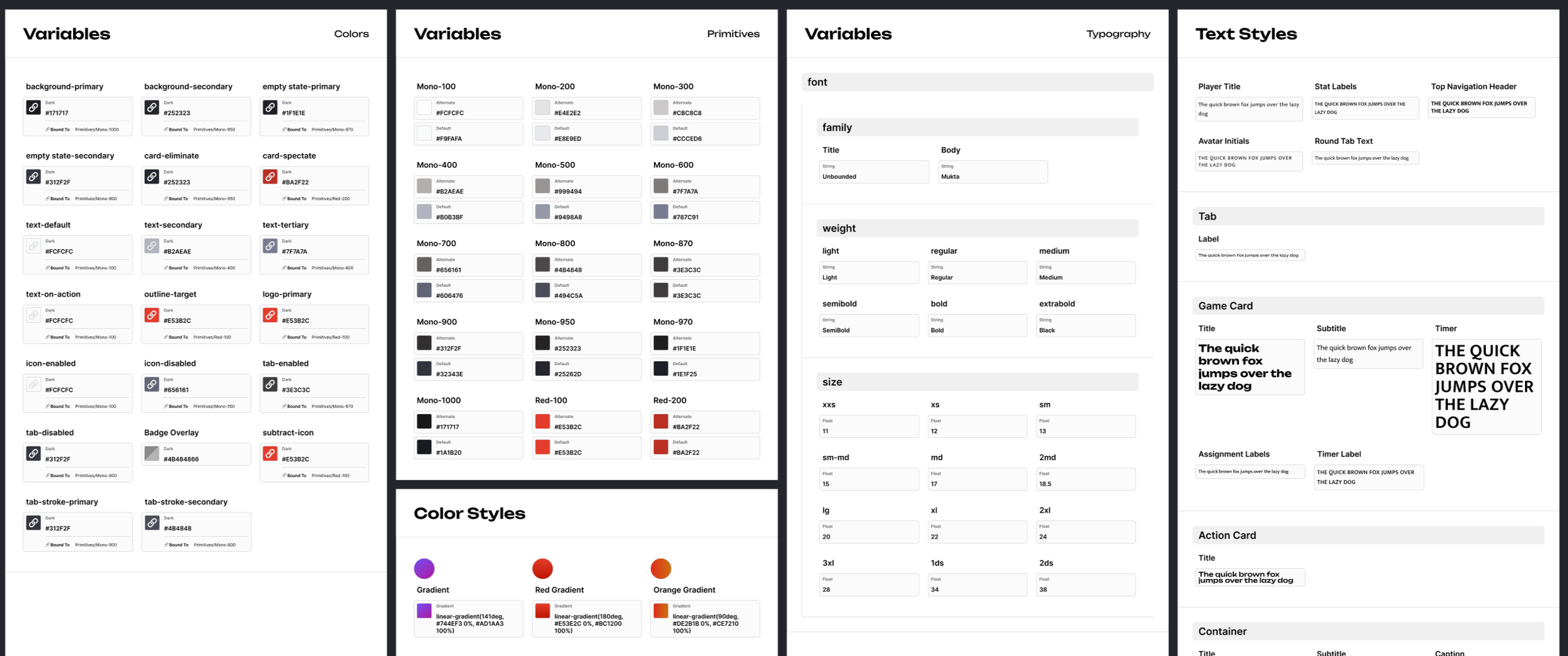
Color Styles, Variables, and Typography
I designed Venari’s visual system to feel stealthy, playful, and immersive - rooted in a dark theme with sharp contrasts and bold accents. The red-and-black palette sets the tone: black brings a sleek, covert vibe, while red adds energy, mystery, and ties directly into the “kill” mechanic at the core of the game. Red can be a challenging color to work with in UI - it’s often associated with error states or warnings - but I was intentional about using it as a symbol of action and urgency, not failure. By limiting red to key moments like CTAs, outlines, and target indicators, and balancing it with clean gradients and neutral tones, it stays intuitive and visually powerful without overwhelming the interface. The typography also strikes a balance between personality and readability - I chose rounded, modern typefaces that feel playful enough for a game, but still mature and clear enough for real-world use. Together, these choices create a design system that feels fun, focused, and easy to navigate, while still reinforcing the core mechanics and mood of the game.
Step 2: Design the UX/UI
Onboarding
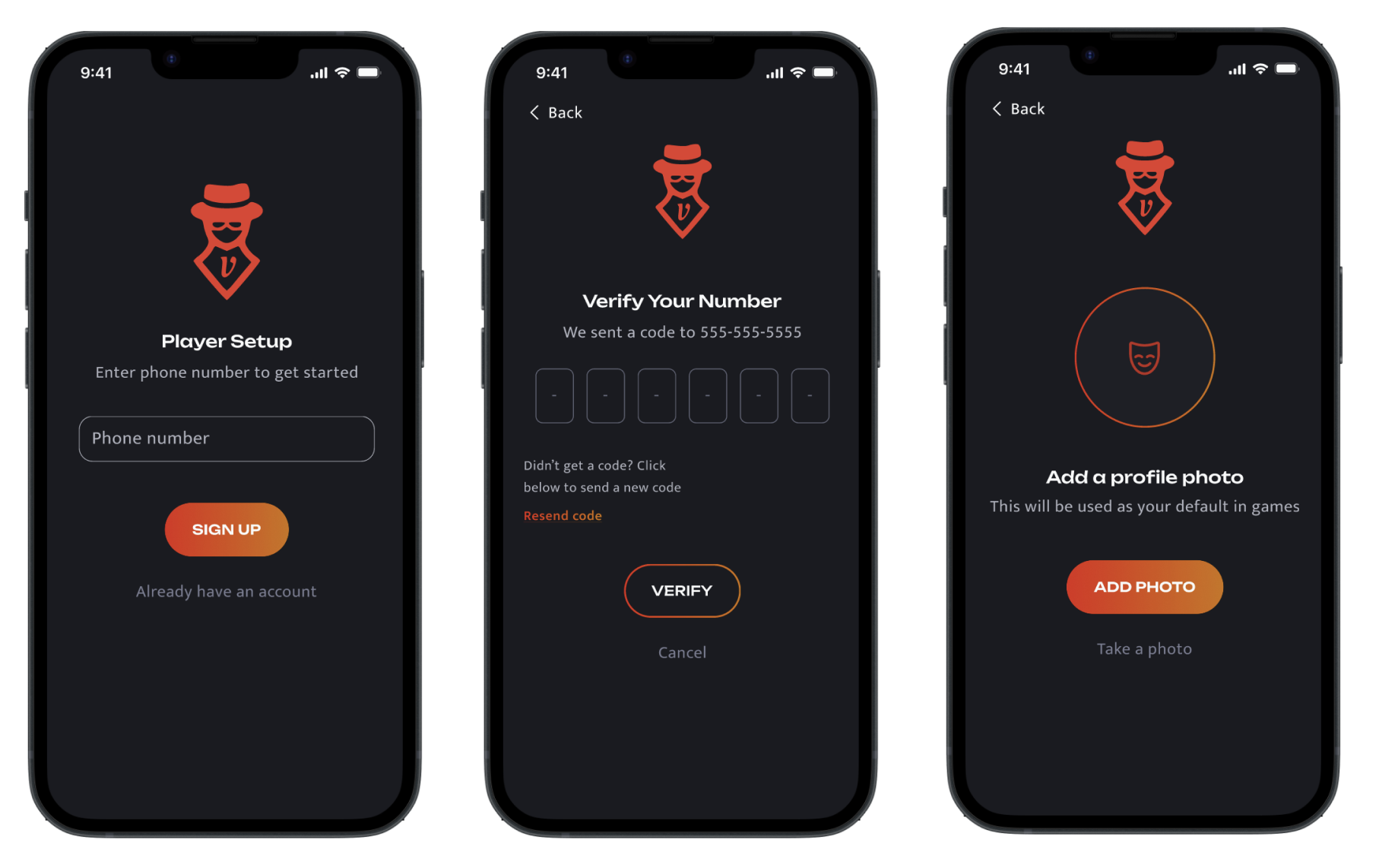
I chose phone number onboarding to make signup fast and intuitive for players, while also leveraging Firebase Authentication for secure, passwordless login and easy user management through verified API calls.
Join, Resume, or Spectate Games
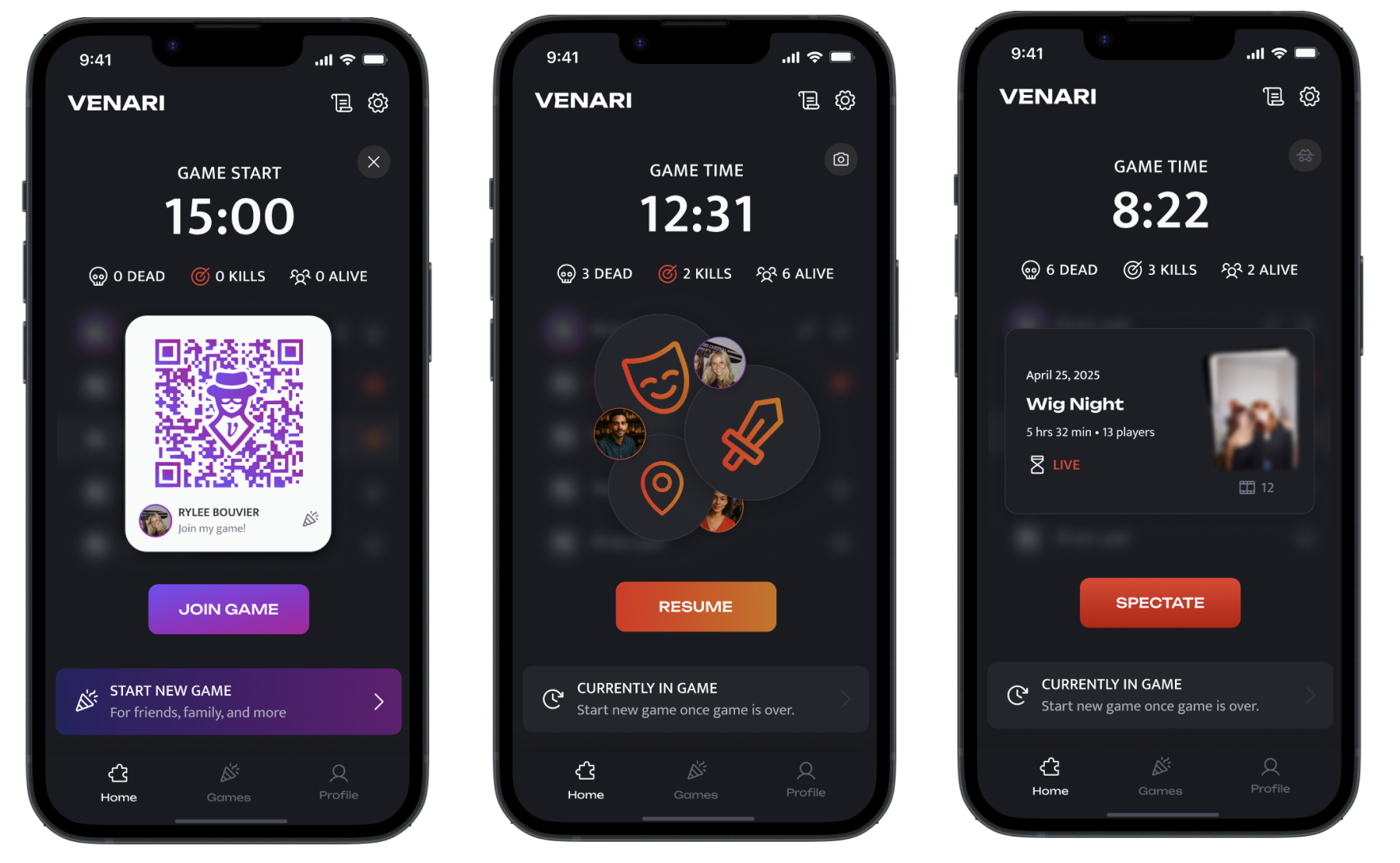
I designed the UX/UI to dynamically reflect each player’s status - whether they’re joining, actively playing, or spectating a game. The interface updates in real time to show the most relevant action: players see a "Join Game" screen if they haven’t entered, a "Resume" button if they’re mid-game, and a "Spectate" option once they’ve been eliminated, keeping the experience intuitive and seamlessly aligned with the flow of gameplay.
Action Cards
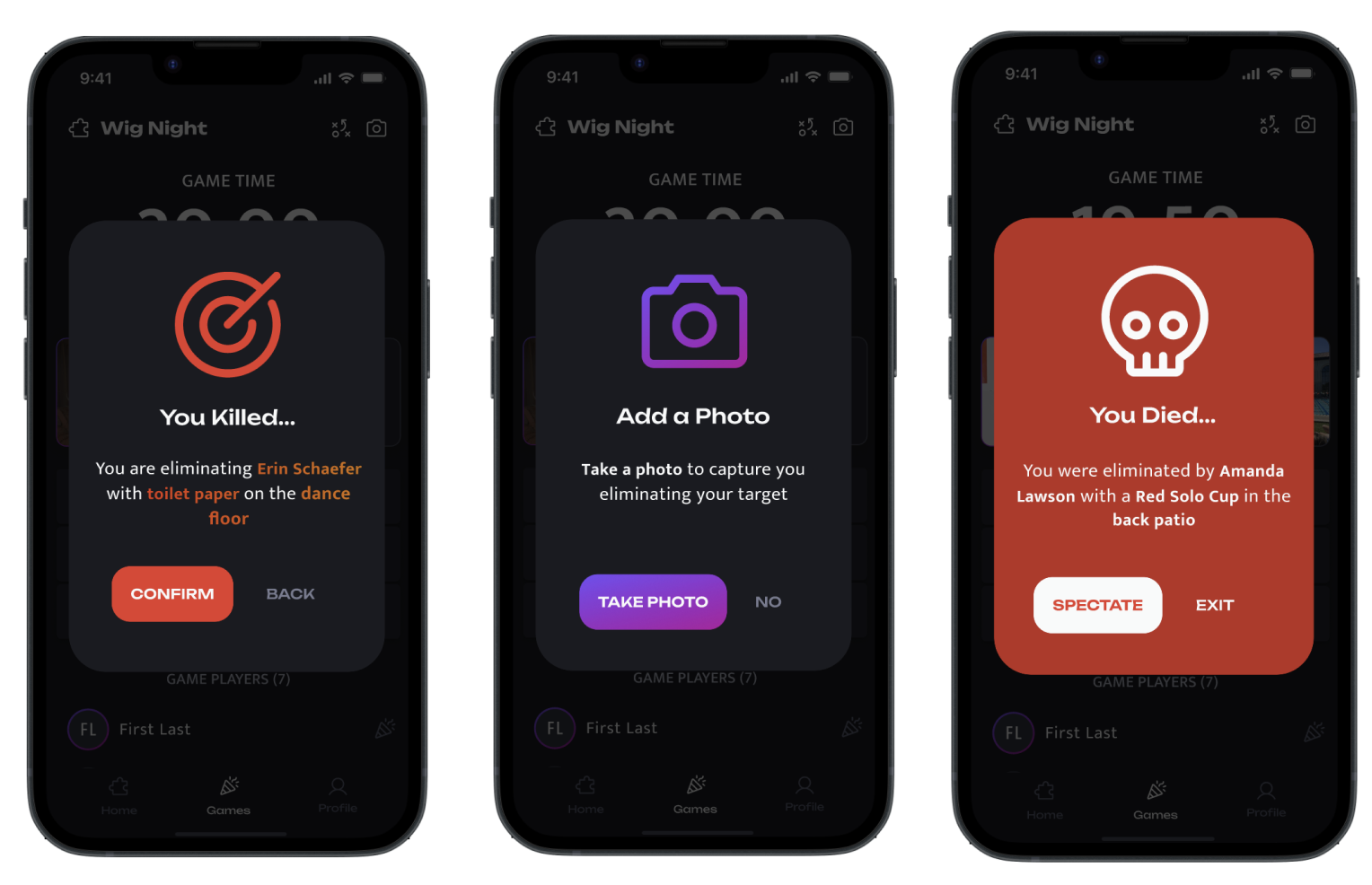
Action cards appear at key moments in the game—when a player eliminates someone or gets eliminated themselves. These cards prompt the user to confirm the kill, optionally capture the moment with a photo, and decide whether to continue spectating. It’s a way to keep players engaged and part of the action, even after they’re out.
Step 3: Launching on Apple Store
I’m currently working with a few Upwork contractors to help finalize the build and upload Venari to the App Store, where it’ll be free to play. This has always been more of a passion project than a business venture—I just wanted to bring a fun, social game to life for my friends and family. It’s been a great way to explore end-to-end product design, from concept to code to launch, and I’m excited to see how people use it in the wild.
Coming soon…